
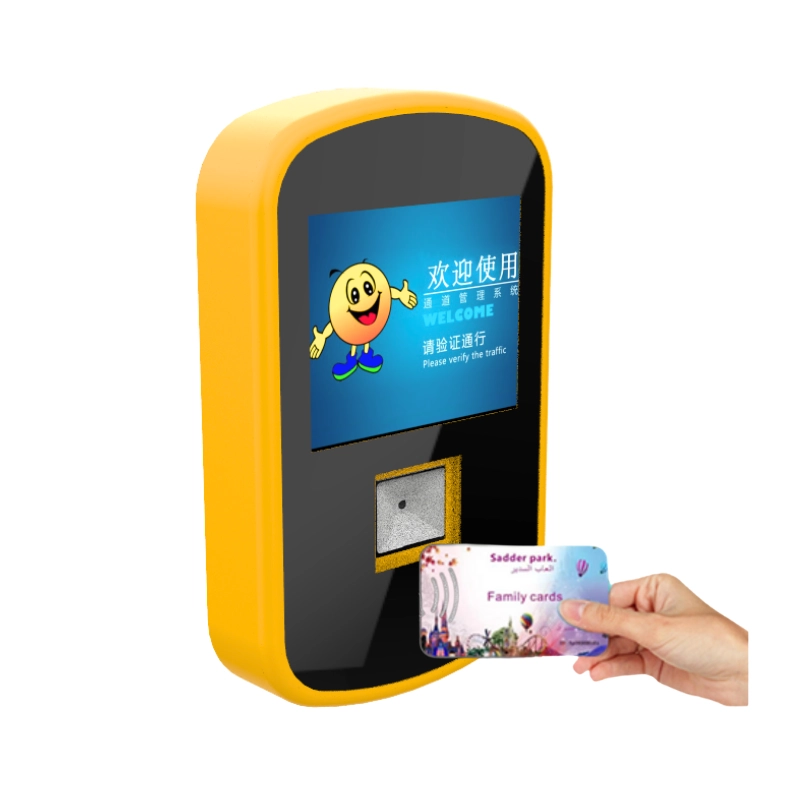
A slow entrance can frustrate visitors, create queues, and put pressure on your ticketing staff. Choosing the right fixed reader for access control helps you verify tickets and passes at designated entry points while connecting access devices with your wider park ticketing system. However, parks often need to accept different credentials, including RFID wristbands, membership passes, and QR code tickets, without installing separate readers at every gate.
ZAH Ticketing develops integrated ticketing and management solutions for attractions, theme parks, and events. With 12 years of industry experience and deployments across more than 1,000 projects worldwide, the company provides ticketing hardware and software designed to support different operational requirements. Its customizable RFID QR code readers offer a modular approach to visitor verification, giving operators more flexibility when configuring gates, kiosks, and restricted-access areas.
How a Fixed Reader for Access Control Supports Park Entry
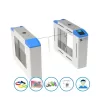
A fixed reader for access control stays installed at a designated checkpoint, allowing visitors to present their credentials without relying on staff to inspect every ticket manually. When integrated with a compatible ticketing platform, the reader can support entry verification and help operators manage different access permissions.
For amusement parks and water parks, this approach can support several entry scenarios:
- Main entrances: Scan QR code tickets and verify RFID-based season passes.
- Member-only areas: Support compatible membership credentials and designated access permissions.
- Self-service kiosks: Connect ticket verification with ticket redemption or other configured workflows.
- Restricted zones: Use different credential types according to each area’s access requirements.
The exact workflow depends on the reader configuration, credential format, and software integration. Before deployment, confirm that your existing ticketing platform supports the required devices and verification rules.
RFID and QR Code Reader Features for Integrated Ticketing
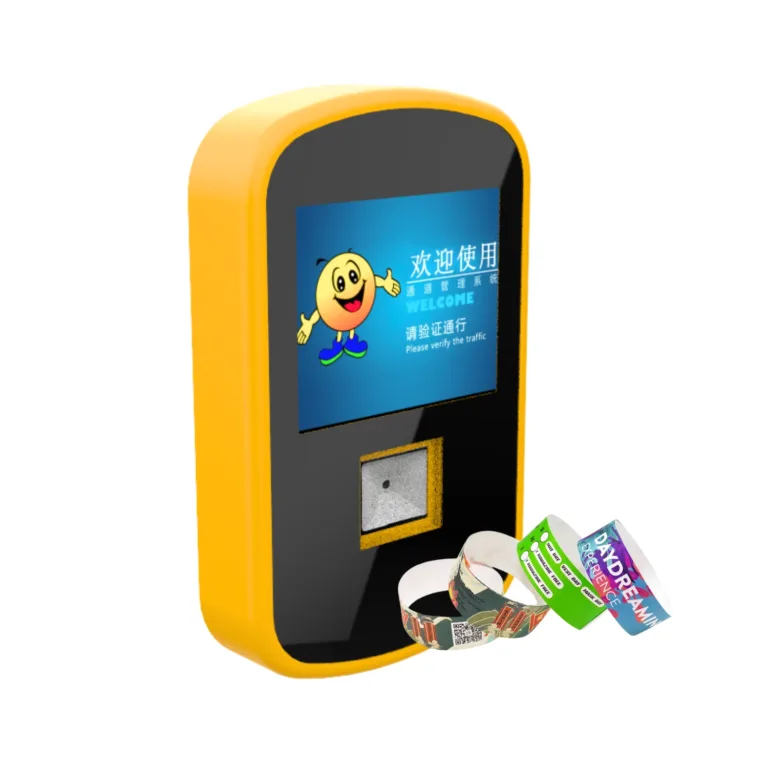
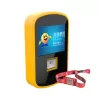
ZAH Ticketing’s customizable reader combines RFID and QR code scanning in a configurable hardware platform. This design can help operators accommodate different ticket formats while planning future changes to their access infrastructure.
Dual-Mode Credential Verification
The supplied specifications describe a configurable scanning system featuring UHF RFID at 860–960 MHz and a high-speed QR CMOS sensor. This combination supports RFID credentials and QR code tickets within a single reader configuration.
For example, a theme park could use RFID wristbands for annual pass holders and QR code tickets for day visitors. Instead of treating these as entirely separate entry workflows, operators can evaluate a dual-mode reader for locations where both credential types are required.
Modular Expansion and Connectivity
The reader includes two optional expansion bays for compatible NFC, biometric, or ICC card-reading modules. Its listed communication options include Ethernet, Wi-Fi 6, 5G, LoRaWAN, and RS-485, subject to the selected configuration.
This modular approach may suit parks that plan to expand their ticketing infrastructure gradually. Nevertheless, confirm module availability, protocol compatibility, and software support before specifying the hardware.
Technical Specifications
| Feature | Supplied specification |
|---|---|
| Core scanning | UHF RFID and QR CMOS sensor |
| UHF frequency | 860–960 MHz |
| RFID detection range | Adjustable from 5 cm to 150 cm |
| QR decoding time | Less than 0.2 seconds |
| Optional expansion | Two module bays |
| Main body protection | IP68-rated |
| Operating temperature | -40°C to +85°C |
| Power input | 12–48V DC; PoE++ support listed |
| Communication | Ethernet, Wi-Fi 6, 5G, LoRaWAN, or RS-485 |
These figures come from the supplied product description. Actual performance depends on the selected hardware, installation environment, credential type, and network configuration. Confirm all specifications with the manufacturer before purchase.
Fixed Access Control Reader vs. Single-Technology Reader
If you are evaluating access control hardware, compare the credential requirements and integration options before selecting a device.
| Evaluation factor | Customizable RFID QR reader | Single-technology reader |
|---|---|---|
| Credential support | RFID and QR scanning, subject to configuration | Usually focused on one scanning technology |
| Expansion | Optional modular reader bays | Depends on the hardware design |
| Installation | Suitable for configured gates and kiosks | Depends on the reader type |
| System integration | Requires compatible software and interfaces | Requires compatible software and interfaces |
| Future changes | May accommodate additional modules | May require additional hardware |
A modular reader is worth evaluating when your park accepts several ticket formats or expects its access requirements to change. A single-technology reader may be sufficient when every entry point uses the same credential.
How to Choose and Deploy a Park Access Control Reader
Follow these steps to evaluate a fixed reader for access control for your attraction.
- Identify your credentials. List the QR code tickets, RFID wristbands, NFC cards, and other credentials you need to support.
- Map your entry points. Identify main gates, member entrances, self-service kiosks, and restricted zones. Record the expected visitor flow at each location.
- Check integration requirements. Confirm compatibility with your existing ticketing software, access permissions, network interfaces, and ticket validation processes.
- Select the hardware configuration. Choose the required scanning modules, mounting orientation, communication interface, and enclosure options.
- Test before full deployment. Verify supported credentials, scan performance, access permissions, network behavior, and recovery procedures at a representative entry point.
- Plan ongoing support. Establish maintenance procedures, software update responsibilities, and a process for handling failed scans or connectivity interruptions.
This process helps you assess the reader against real operating conditions rather than relying on specifications alone.
FAQ
1. Can a fixed reader support both RFID wristbands and QR code tickets?
The described platform supports configurable UHF RFID and QR code scanning. Confirm the required credential formats and software integration before ordering.
2. Is the reader suitable for outdoor amusement park entrances?
The supplied specifications list an IP68-rated main body and an operating temperature range of -40°C to +85°C. Verify the complete installed assembly’s environmental suitability, including connectors, mounting, and any optional enclosure.
3. Can the reader integrate with an existing park ticketing system?
Integration depends on supported communication interfaces, software APIs, credential formats, and validation logic. Ask ZAH Ticketing to confirm compatibility with your current ticketing platform and any third-party systems.
Conclusion
Choosing the right fixed reader for access control helps you build a more flexible entry process for amusement parks, water parks, and other visitor attractions. ZAH Ticketing’s customizable RFID QR code reader combines dual-mode scanning with optional expansion modules and multiple communication options, allowing you to evaluate a configuration around your specific gate, kiosk, and ticketing requirements. Before committing to a deployment, verify technical compatibility, environmental requirements, and integration scope with the supplier.
CTA
Contact ZAH Ticketing to discuss your park’s entry requirements, supported ticket credentials, and existing ticketing software. Request a technical consultation to review the appropriate reader configuration and integration options for your project.


Add comment